

Pet Insurance Boom: How Rising Vet Costs Are Reshaping America’s Pet Care Landscape
The pet insurance industry in the United States is experiencing unprecedented growth, driven by skyrocketing veterinary costs and pet owners’ increasing willingness to invest in comprehensive healthcare for their furry companions. As we move through 2026, the market dynamics reveal both opportunities and challenges that are transforming how Americans care for their pets.
Reading time: 7 minutes
Key Takeaways:
- 📈 US pet insurance premiums hit $4.7 billion in 2024—up 21.4% from 2023
- 💰 Vet costs jumped 7.9% in one year; 91% of pet owners report financial stress
- 🐱 Cat insurance is growing faster than dog insurance (26% vs 20%)
- ⚠️ Nationwide cancelled 100,000+ policies due to rising costs
- 🔮 Only 6.4M pets insured out of 135M+ cats and dogs nationwide
When Sarah Martinez rushed her golden retriever to the emergency vet last year, she had no idea the bill would exceed $4,500. The diagnosis: a swallowed foreign object requiring surgery. Thankfully, her pet insurance covered 90% of the cost. Stories like Sarah’s are becoming increasingly common—and they’re driving a massive shift in how Americans approach pet healthcare.
A Market Breaking Records
The numbers tell a compelling story of explosive growth. According to industry data, the US pet insurance industry surpassed $4.7 billion in gross written premiums in 2024, representing a remarkable 21.4% increase from the previous year’s $3.9 billion1. This surge reflects more than just incremental growth—it represents a fundamental shift in how American pet owners approach animal healthcare.
To put this expansion in perspective, the market has more than doubled since 2020, when premiums stood at just $2 billion. By the end of 2024, approximately 6.4 million pets were insured, up from 5.7 million in 20231.
But here’s the reality check: While this growth is impressive, insured pets still represent less than 5% of the estimated 135 million cats and dogs in American homes. The market’s potential for expansion is enormous.
The Cost Crisis Driving Change
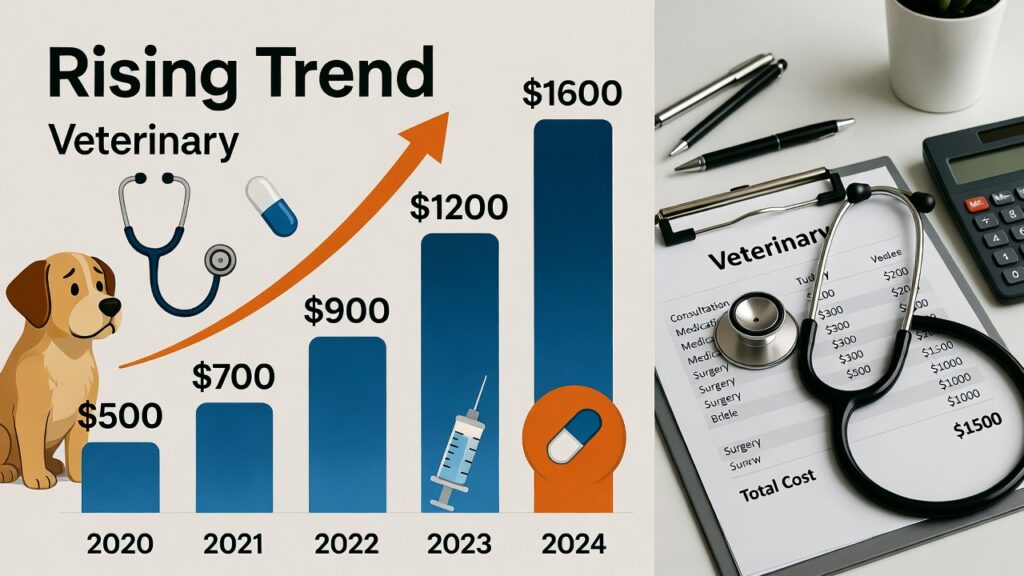
Behind these statistics lies a more sobering reality: veterinary care costs are climbing at an alarming rate, pushing more pet owners to seek financial protection.
Consider these eye-opening figures:
- Urban veterinary services saw prices jump 7.9% between 2023 and 2024 alone
- Urban pet care costs have increased 11% over the last two years
- Over the past decade, costs have surged nearly 60%2
These escalating costs are creating real financial stress for pet owners. Recent surveys reveal that:
- 91% of pet owners experience financial anxiety related to high veterinary care costs
- 63% struggle with unexpected veterinary bills2
When a routine emergency visit can easily exceed $1,000, and complex treatments can run into tens of thousands of dollars, pet insurance is transitioning from a luxury to a practical necessity for many families.
What’s Behind the Price Surge?
The cost pressures stem from multiple sources:
- Advanced medical technology – MRI scans, CT imaging, and sophisticated diagnostics that mirror human healthcare
- Increased specialization – Veterinary oncologists, cardiologists, and orthopedic surgeons
- Rising operational costs – Real estate, equipment, staffing, and pharmaceutical expenses
- Expanded treatment options – From chemotherapy to physical rehabilitation therapy
If you’re unsure how accident and illness coverage works, read our complete beginner’s guide to pet insurance coverage.
The Surprising Cat Insurance Boom 🐱
Here’s a trend that’s catching industry experts off guard: cat insurance is outpacing the growth of dog insurance.
Between 2022 and 2023, gross written premiums for feline insurance grew by approximately 26%, significantly outpacing the 20% growth rate for canine coverage3. This shift reflects changing attitudes toward cat ownership and healthcare.
Why the Feline Surge?
Historically, cats have been underinsured compared to dogs, partly due to perceptions that cats are lower-maintenance pets requiring less medical intervention. But several factors are changing this:
- Indoor cat lifestyle – More cats living exclusively indoors means owners are investing more in their long-term health
- Health awareness – Recognition that cats face serious health risks like chronic kidney disease, diabetes, and hyperthyroidism
- Later diagnosis challenges – Cats are notorious for hiding illness, making insurance coverage for unexpected diagnoses more valuable
- Growing cat ownership – Millennials and Gen Z are choosing cats at higher rates than previous generations
As more Americans recognize that cats deserve the same level of healthcare protection that dog owners have long embraced, the feline insurance market is experiencing its moment.
What Pet Owners Are Actually Buying
The types of coverage pet owners are choosing reveal telling preferences. Accident and illness policies account for 86.32% of the market in 2024, vastly outpacing accident-only plans3. This preference for comprehensive protection reflects pet owners’ desire for robust coverage against unforeseen medical expenses rather than just catastrophic incidents.
Modern Pet Insurance Goes Beyond Basics
Today’s pet insurance policies increasingly mirror human health insurance offerings:
- ✅ Wellness add-ons – Routine checkups, vaccinations, and preventive care
- ✅ Prescription coverage – Medications for chronic conditions
- ✅ Alternative therapies – Acupuncture, chiropractic care, and hydrotherapy
- ✅ Behavioral therapy – Training and anxiety treatment
- ✅ Genetic testing – Early detection of hereditary conditions
- ✅ Chronic condition management – Ongoing treatment for diabetes, arthritis, and more
Some providers have even introduced coverage for end-of-life care, recognizing that compassionate farewells are an important part of pet ownership.
The Nationwide Shockwave: Industry Challenges Surface ⚠️
Despite the impressive growth trajectory, the pet insurance industry faces significant headwinds that came into sharp focus in 2024.
In June 2024, Nationwide Mutual Insurance announced it would cancel more than 100,000 pet insurance policies.2 The company cited rising veterinary care costs as a primary factor, sending shockwaves through the market and raising uncomfortable questions about the industry’s sustainability.
The Balancing Act
This mass cancellation underscores a fundamental challenge facing the industry: insurers must walk a tightrope between:
- Affordable premiums that attract and retain customers
- Adequate coverage that actually helps when pets need care
- Sustainable profit margins that keep companies in business
As veterinary costs continue to rise faster than general inflation, insurers face difficult choices:
- Increase premiums (risking customer loss)
- Reduce coverage or increase deductibles (diminishing value)
- Accept lower margins (potentially unsustainable long-term)
- Exit the market entirely (as Nationwide partially did)
Finding innovative solutions to this dilemma will be crucial for the industry’s long-term health and its ability to serve pet owners effectively.

The “Pet Parent” Revolution
Underlying all these trends is a broader cultural shift often termed “pet humanization”—the tendency for pet owners (or “pet parents,” as many now prefer) to view their animals as family members deserving the same quality of care as human relatives.
Numbers Don’t Lie
This isn’t just sentiment—it’s backed by spending habits:
- Americans spent over $147 billion on their pets in 2023
- The average dog owner spends $1,500-$2,000 annually on pet care
- Millennial and Gen Z pet owners spend 67% more on their pets than Boomers did at the same age
This emotional and financial investment in pet wellbeing creates a favorable environment for insurance adoption. When pets are considered family members, insuring them becomes as logical as insuring any other family member or valuable asset.
Pet parents are increasingly willing to:
- Pursue aggressive cancer treatments for their pets
- Seek specialist care from veterinary cardiologists or neurologists
- Invest in preventive health measures and regular wellness exams
- Consider surgical interventions that would have seemed excessive decades ago
Technology Makes Insurance Easier Than Ever
The growth of pet insurance has been facilitated by technological advances that make purchasing and managing policies more straightforward than ever before.
Digital-First Experience
Modern pet insurance providers offer:
- Instant online quotes – Get pricing in 60 seconds or less
- Mobile apps – Submit claims with a photo of your vet bill
- Fast reimbursement – Direct deposit within 3-5 days for many providers
- Telemedicine – Virtual vet consultations covered by some plans
- Digital health records – Easy access to your pet’s complete medical history
A New Employee Benefit
Another emerging trend: employer-sponsored pet insurance. More companies are adding pet coverage to their benefits packages as a way to attract and retain talent, particularly among younger workers who increasingly prioritize work-life balance and pet-friendly policies.
In fact, companies offering pet insurance as a benefit report:
- Higher employee satisfaction scores
- Improved retention rates among pet owners
- Enhanced employer brand reputation
What’s Next for Pet Insurance?
As we progress through 2026, the pet insurance industry stands at a crossroads. The fundamental demand drivers remain strong:
- ✅ Rising veterinary costs
- ✅ Pet humanization trends
- ✅ Increased awareness of insurance benefits
However, the industry must navigate challenges around pricing sustainability, coverage adequacy, and market disruptions like the Nationwide cancellations.
Innovation on the Horizon
The industry’s evolution will likely include:
- Usage-based models – Pay based on your pet’s actual health risk factors
- Preventive care incentives – Discounts for annual wellness visits and healthy habits
- Integrated wellness programs – Combining insurance with fitness trackers and health monitoring
- Vet partnerships – Direct-to-consumer pricing through veterinary practice networks
- AI-powered underwriting – Faster approvals and more personalized pricing
The Bottom Line for Pet Owners
For pet owners, the message is clear: as veterinary care costs continue to climb, insurance is becoming less of an optional extra and more of a financial planning essential.
Is Pet Insurance Right for You?
Consider pet insurance if:
- 🐾 Your pet is young and healthy (premiums are lowest)
- 🐾 You couldn’t comfortably pay a $3,000-$5,000 emergency vet bill
- 🐾 You want access to advanced treatments without financial stress
- 🐾 Your breed is prone to hereditary health issues
The question is no longer whether pet insurance makes sense, but rather which policy best fits your circumstances and your pet’s health needs.
Compare the top-rated pet insurance providers in our 2026 comparison guide.
Final Thoughts
The coming years will reveal whether the pet insurance industry can maintain its growth trajectory while addressing cost pressures and delivering on its promise to make quality veterinary care financially accessible to more American pet owners.
For now, the trend line points firmly upward, suggesting that pet insurance’s moment has arrived. With 129 million pets still uninsured, the opportunity—and need—for this coverage has never been greater.
References
Have questions about pet insurance? Drop a comment below or reach out—we’d love to help you find the right coverage for your furry family member!
As the landscape of pet care evolves, the importance of comprehensive pet insurance becomes increasingly apparent. The rising costs associated with veterinary services have prompted many pet owners to seek financial solutions that safeguard their pets’ health without incurring crippling expenses. This shift not only underscores the need for insurance coverage but also highlights the potential for innovation within the industry to create more accessible options. Ultimately, the success of pet insurance will depend on its ability to adapt to the changing demands of pet owners while ensuring the welfare of their beloved companions.